KEY TAKEAWAYS
- Forest living should be evaluated through native species, canopy coverage, soil health, water management and long-term maintenance.
- Miyawaki planting can establish dense native habitat, but it requires documented species, establishment care and survival planning.
- Visit Woods Shamshabad or Woods Indresham and verify the current landscape stage, approvals, title and common-area maintenance provisions.
A direct answer: what is forest living in Hyderabad?
Forest living in Hyderabad means choosing a home or plotted community planned around native trees, protected green space, biodiversity, shaded movement and closer access to nature. It is different from ordinary landscaping because the ecological layout should be designed as a living system, with native species, soil preparation, water management and long-term maintenance built into the community plan.
Why buyers are interested in forest-led communities
Hyderabad’s residential buyers are increasingly looking beyond floor area and amenities. Tree shade, quieter outdoor spaces, walkable streets and visible biodiversity can make everyday life feel less congested. In hot and rapidly developing cities, mature shade and permeable soil also help create more comfortable microclimates than fully paved surfaces.
Forest living should therefore be judged as a performance-led asset, not simply as a marketing image. Buyers should ask whether trees are native, mature enough to provide shade, protected by a practical maintenance plan and integrated into stormwater and walking routes.
Native forest versus ornamental landscaping
A native forest uses locally appropriate species that support insects, birds and seasonal ecological cycles. Ornamental landscaping may still look attractive, but it can require repeated replacement, intensive irrigation and specialist pruning. A useful project should explain the species plan, planting density, canopy development timeline and responsibility for replacement of trees that do not survive.
Miyawaki forest communities explained
A Miyawaki greenbelt is an intensive native planting method that uses multiple layers and high-density mixed planting to establish a compact forest quickly. During establishment, careful soil preparation, irrigation and monitoring are essential. Buyers should not accept a Miyawaki label without understanding the planted area, survival rate, age and stage of canopy development. Claims should match visible, measurable project information.
The real lifestyle benefits
Forest-led communities can provide shaded walking routes, birdsong, seasonal change and more visual privacy than open lawns. Residents may spend more time outdoors when safe paths and seating are integrated with the planting. These benefits depend heavily on day-to-day management, lighting, drainage and access control, so the landscaping and resident experience must be reviewed together.
What to inspect before buying
Visit at different times of day and observe shade, dust, traffic noise, drainage and pedestrian comfort. Ask for the landscape concept, native species list, maintenance budget, watering source and survival warranty. Confirm whether the forest is within common areas, private land or a legally protected amenity area, and verify all approvals separately from sales claims.
Maintenance is part of the investment
A credible community publishes its operation and maintenance approach. Young trees need watering, pruning and protection; established forests need invasive-species control, mulching, soil testing and periodic replacement. Compare how the society or developer funds long-term landscape care, because good planting without maintenance quickly becomes an avoidable expense.
Forest living checklist for Hyderabad buyers
Choose the location first, then verify connectivity, title, approvals, utilities and the delivery record. After those fundamentals, assess canopy coverage, native diversity, water requirements, drainage, walking routes, security and common-area accessibility. A forest should improve the residential experience while remaining affordable to maintain.
Stonecraft’s forest-led approach
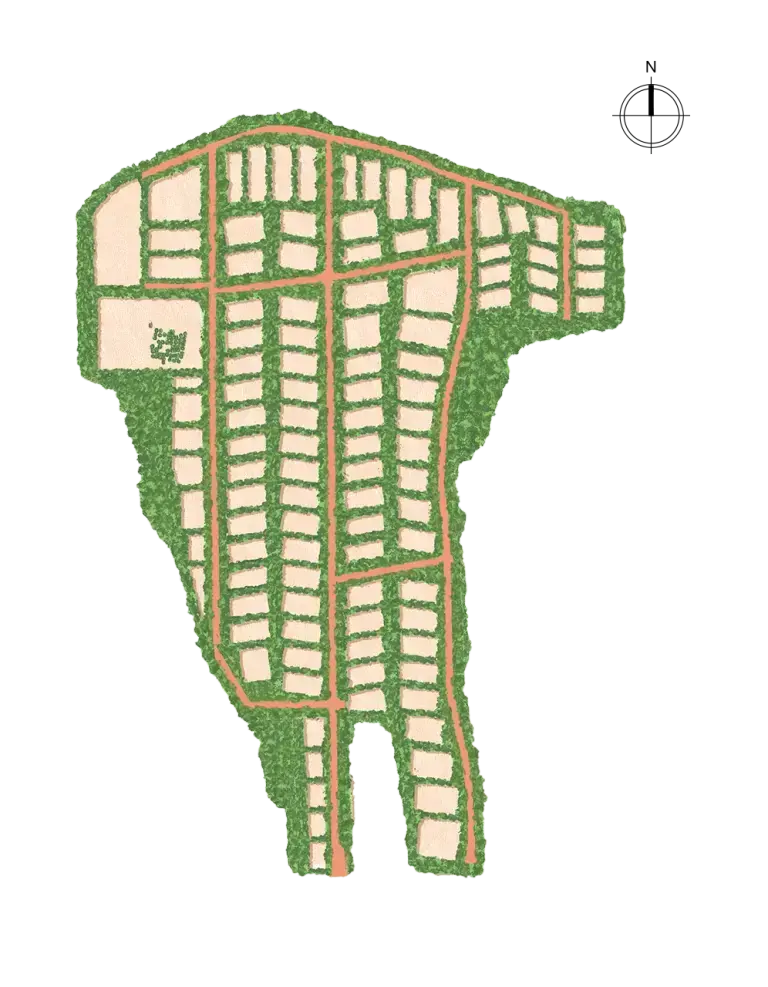
Stonecraft Group applies a nature-first approach at Woods Shamshabad and Woods Indresham. Woods Shamshabad combines forest-integrated residential planning with a large Miyawaki greenbelt, while Woods Indresham retains a central mango grove and applies native planting across the community. Buyers should visit the projects and verify their present landscape stage, approvals and maintenance provisions.
Frequently asked questions
What is forest living in Hyderabad?
Forest living means living in a home or community planned around native trees, protected green space, biodiversity, shaded walking routes and responsible water and soil management.
How is a Miyawaki forest different from normal landscaping?
A Miyawaki forest uses dense, mixed native planting in multiple layers to establish a compact green habitat faster than conventional ornament-led landscaping. It requires careful soil preparation, watering and maintenance during establishment.
What should buyers verify in a forest community?
Buyers should verify approvals, title, planted area, species list, survival commitments, water source, maintenance budget, drainage, access and the legal status of the green space.
Which Stonecraft projects include forest-led planning?
Stonecraft Group develops forest-led communities including Woods Shamshabad near Shamshabad and Woods Indresham in the Patancheru–Indresham corridor. Buyers should verify current project information and approvals.