KEY TAKEAWAYS
- Compare density, land entitlement, privacy and governance using project-specific documents and consistent calculation methods.
- Land and apartment ownership have different construction, maintenance, liquidity and legal risks.
- Woods Shamshabad statistics are company-provided; verify them independently. No investment outcome is guaranteed.
This article is published by Stonecraft Group. Project-specific figures and comparisons are company-provided and have not been independently audited here. Verify current project records, approvals and legal documents before relying on them. Illustrative comparisons do not predict performance or guarantee investment returns.
- Executive Summary
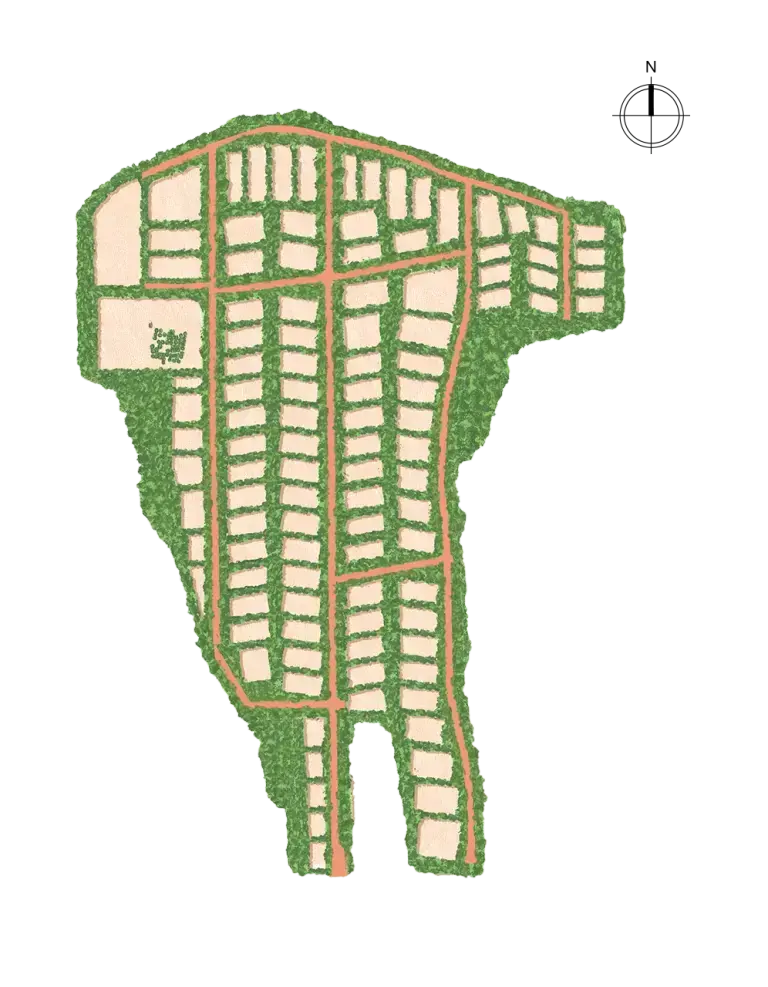
High-Rise Fatigue is the growing discontent among Ultra-High-Net-Worth Individuals (Ultra-HNIs) who buy luxury apartments priced from ₹10 crore to ₹25 crore only to share their land parcel with 3,000 other households. As vertical sky villas become mass replicated commodities across West Hyderabad, with unlimited Floor Space Index (FSI) norms, family offices and founders are moving capital to density-controlled horizontal land, such as Woods Shamshabad by Stonecraft Group, where 60 acres of Miyawaki forest is strictly restricted to 110 luxury plots.
India's luxury real estate and its ₹25 crore paradox
So you pay ₹10 crore to ₹25 crore for a flagship “sky villa” in a marquee tower and you share that 15-acre or 20-acre patch of ground with 3,000 other families. This problem now has a specific term in the private wealth management and family office circles across India: “High-Rise Fatigue.”
For the last ten years, the premium real estate in West Hyderabad, especially in Kokapet, Neopolis and the Financial District, has sold one vertical template. Developers marketed the peak of urban prosperity as 50-storey glass buildings, double-height decks and podium-level infinity pools.
Today, the founders of India, C-suite executives and legacy wealth builders are examining that everyday lived reality of that vertical formula. Private elevator foyers and concierge desks create the sense of exclusivity within the apartment, but once out the front door, tenants confront the inescapable institutional crowding.
What is driving high-rise fatigue in ultra-luxury towers?
There is structural friction associated with vertical living at high densities that no amount of clubhouse amenities can overcome. Even in gated skyscrapers costing more than ₹15,000 per sq ft, ultra-luxury customers face five consistent bottlenecks:
Elevator Queues: Despite high-speed lifts, 50-storey towers experience five-to-eight-minute waits during peak morning office and school hours.
Basement Bottlenecks: Multi-level underground parking garages produce daily exit congestion where thousands of chauffeur-driven automobiles converge on two or three exits.
Acoustic Crowding: Thousands of residents and delivery people are constantly walking through concrete podiums, echoing lobbies, and shared utilities.
Visual encroachment: Floor-to-ceiling glass facades look straight into a next tower only 35 to 40 meters away, necessitating that curtains stay drawn.
Diluted land ownership: Buyers who spend ₹20 crore for a 6,000-sq ft sky home are typically offered an Undivided Share of Land (UDS) of less than 100 square yards.
Square footage hanging 400 feet in mid-air is not airspace. Sixty handpicked clubhouse luxuries won’t make up for no private soil, no natural silence, and no spatial autonomy.
The FSI Illusion: When Vertical Square Footage Doesn’t Feel Scarce
One law of economics - scarcity has always ruled true luxury. When an item can be produced at scale anytime demand arises, it is no longer a trophy asset but a standardized commodity.
Markets like Hyderabad have flexible Floor Space Index (FSI) laws which enable developers to achieve remarkable density on small land lots. When thousands of premium residences can be copied vertically just by paying for higher FSI approvals, the sky stops being scarce. The next 55-storey launch across the road might block a view that presently demands a ₹3 crore premium within 36 months.
Land works on the exact opposite principle: horizontal, density controlled. You can't build an Earth, and you can't stack low-density ecologies on top of one other. Every square yard of land is permanently physically scarce when a developer purposely restricts density to less than two homes per acre.
High-Density Sky Villas Vs. Density-Controlled Landed Estates
| Evaluation Parameter | High-Density Sky Villas | Woods Shamshabad Estate | What Buyers Should Verify |
|---|---|---|---|
| Population Density | 80 to 150 homes per acre | Under 2 homes per acre | Preserves privacy and exclusivity |
| Land Ownership | Fractional UDS under 100 sq. yds. | 1,000 to 5,000 sq. yd. plots | Verify registered ownership and title |
| Ecological Footprint | Concrete podium over basements | Company-reported 4,50,000+ native trees | Verify planting records and measured site outcomes |
| Supply Elasticity | Permitted supply depends on planning rules | Project capacity subject to approvals | Future supply and demand are uncertain |
| Architectural Control | Restrictions depend on documents and law | Custom design subject to approvals | Verify covenants and building permissions |
The comparison shows that by shifting from vertical condominiums to horizontal estates, the buyer’s balance sheet is changed from a declining concrete asset to an appreciating biological and land asset.
Woods Shamshabad: Epitome of Density-Controlled Biophilic Living
Moving to the suburbs won’t fix High-Rise Fatigue, it’s about re-engineering how luxury property is planned, forested and managed. Stonecraft Group has led the paradigm shift in Hyderabad with its flagship venture Woods Shamshabad.
Rather than maximize FSI to create thousands of apartments, Stonecraft Group converted a 60-acre barren land in South Hyderabad into a self-sustaining Miyawaki forest estate built on five core pillars:
Radical Density Control: The entire gated sanctuary is spread across 60 acres and is rigorously confined to 110 luxury plots ranging from 1,000 to 5,000 square yards in size.
Miyawaki Forest Ecosystem: At the heart of the estate is an 18-acre central forest and dense outer green buffers made up of about 4,50,000 native trees grown using the Japanese Miyawaki afforestation technique.
Thermal Microclimate Dividend: Woods Shamshabad’s dense native canopy cover and natural water bodies help to reduce ambient temperature by up to 4°C as against Hyderabad’s concrete heat islands.
Architectural Autonomy: Homeowners build their own custom, ground-hugging homes surrounded by private orchards, natural soil and open sky views instead of concrete party barriers.
Seamless Access to the Corridor: Located in Shamshabad, a stone's throw from Rajiv Gandhi International Airport (RGIA) and Nehru Outer Ring Road (ORR), residents can reach the Financial District without facing the internal traffic snarls of West Hyderabad.
At Woods Shamshabad, luxury is not counted in the number of floors an elevator takes you up but in the number of hundreds of natural trees that lie between your verandah and your nearest neighbour.
Why are family offices eyeing low-density land as a generational hedge?
Beyond lifestyle fatigue, intergenerational wealth preservation is also increasingly driving ultra-HNI portfolio allocation. Family offices see three structural advantages of density-controlled plotted developments versus high-rise flats when considering real estate over a 20-to-30-year horizon:
Freehold: High rise buildings incur physical depreciation and increasing expenditures for structural upkeep after year 15. Direct ownership of 1000+ sq yards of contiguous land compounds steadily.
Zero FSI Dilution: By buying into a covenanted 110-plot forest community, you ensure that the micro-market within the gates will never be re-zoned for higher population density.
Generational Adaptability: A horizontal estate gives a family room to grow, modify or develop sustainable pavilions across decades, without needing consent from a 3,000-member apartment owners association.